How Music Helps People Overcome Life's Challenges, Find Inner Strength, and Heal Emotionally
Discover how music helps people overcome life's challenges, find inner strength, and heal emotionally. Explore the transformative power of sound for resilience.
In this article
- A Familiar Moment When Music Says What You Cannot
- How the Brain Turns Sound Into Strength
- From arousal to agency
- What the Research Actually Shows
- Three conclusions worth carrying forward
- Real Stories of Music Meeting Hard Seasons
- Grief that needs somewhere to go
- Stress that needs a boundary
- Recovery that needs participation
- A Three-Part Listening Method You Can Start This Week
- Start with recognition
- Continue with a manageable shift
- Finish with an anchor
- When Music Keeps You Stuck Instead of Moving You Forward
- Check the effect, not the intention
- Healing Without a Therapist in the Room
- Adapt the practice to real conditions
- Understand the digital compromise
- Your Personal Plan for Music as a Source of Strength
- A practical checklist
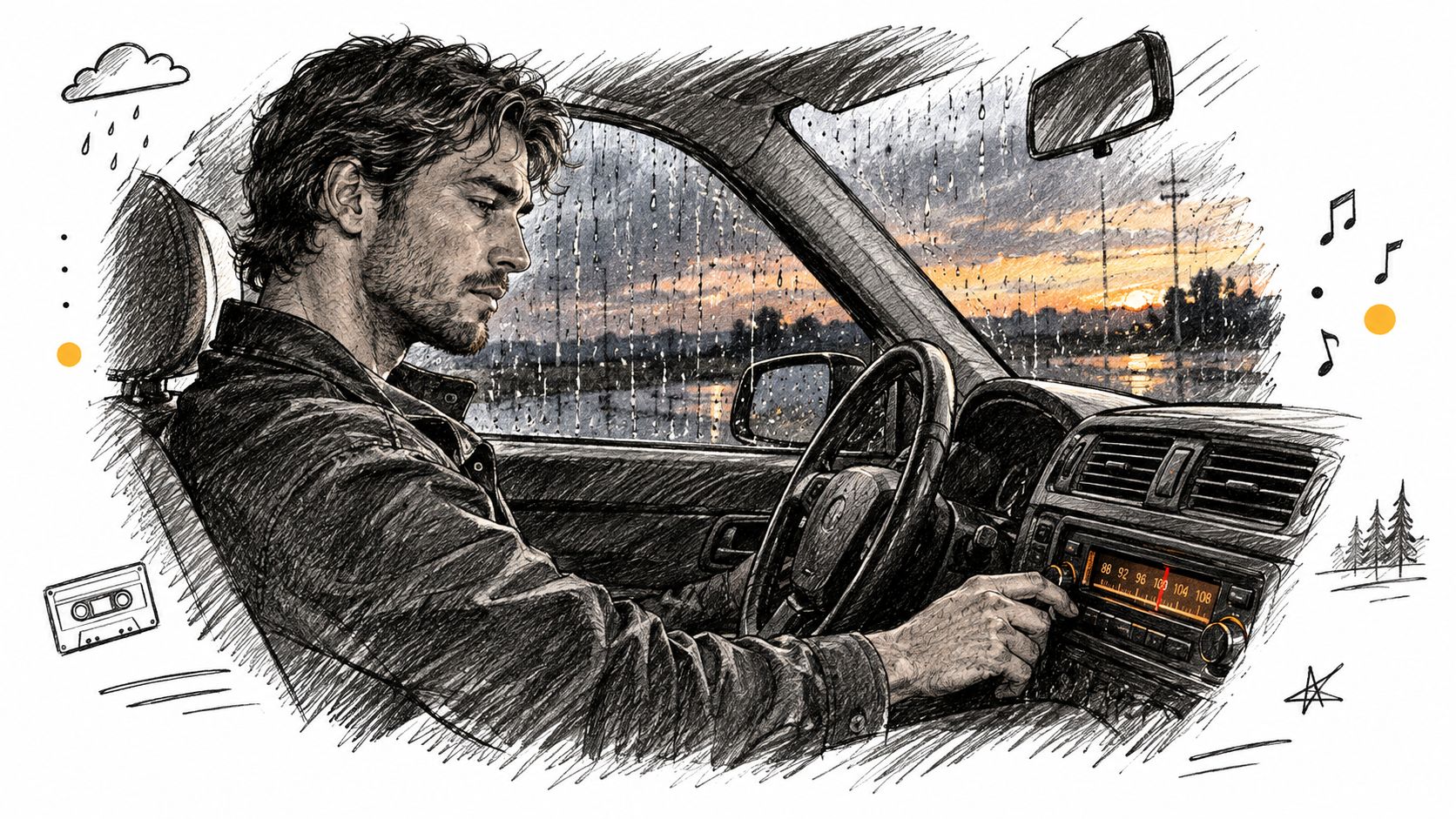
You're driving home after a difficult conversation. The rain blurs the streetlights, your thoughts keep circling the words you wish you'd said, and then a familiar song begins. Nothing about the situation has changed, but your breathing eases. The singer seems to express the grief, anger, or longing that you couldn't organize into sentences.
That moment can feel private and mysterious, yet it reflects something many people experience. Music can give shape to emotion, steady attention, create movement when motivation is low, and remind us of parts of ourselves that hardship has pushed into the background. Used carefully, it can support the work of overcoming life's challenges, finding inner strength, and healing emotionally.
It can also do the opposite. A song linked to loss may deepen rumination. A playlist built around despair may keep distress active rather than help you process it. The useful question isn't just whether music heals. It's whether this music, in this moment, is helping you move toward relief, connection, and functioning.
A Familiar Moment When Music Says What You Cannot
The song ends, but something inside you has shifted. You may still be sad, angry, or confused. Yet the feeling has become less like a knot and more like something you can sit beside. Music hasn't explained the conversation or repaired the relationship. It has helped you stay present with an experience that felt too large for ordinary language.
That distinction matters. Emotional healing isn't the same as forgetting pain. Often, it means becoming able to feel what happened without being completely controlled by it. Music may provide a temporary container for that process. A melody repeats, a rhythm offers a steady pulse, and lyrics can lend language to an experience that feels wordless.
For one person, a quiet non-vocal track may make grief bearable. For another, singing loudly in the car may release anger. Someone living with chronic stress may use the same short playlist each evening to signal that work has ended. A person recovering from illness may tap a rhythm or hum a familiar tune to reclaim a sense of participation in their own body.
A useful starting point: Don't ask whether a song is objectively calming. Ask what it does to your breathing, attention, memories, and next action.
Research supports the idea that music can affect more than mood in the moment. A 2022 multilevel meta-analysis examined 47 independent studies, 76 effect sizes, and 2,747 participants. Across physiological and psychological outcomes, music-based interventions showed a medium-to-large overall benefit for stress reduction, with an effect size of d = 0.723. The physiological effect was d = 0.380, while the psychological effect was d = 0.545, as reported in the meta-analysis of music-based interventions for stress.
Those findings don't mean every song works for every listener. They suggest that structured musical activities, including listening, singing, playing instruments, and guided music therapy, can help some people regulate stress. The rest depends on choice, context, personal meaning, and whether listening leads toward engagement or away from life.
How the Brain Turns Sound Into Strength
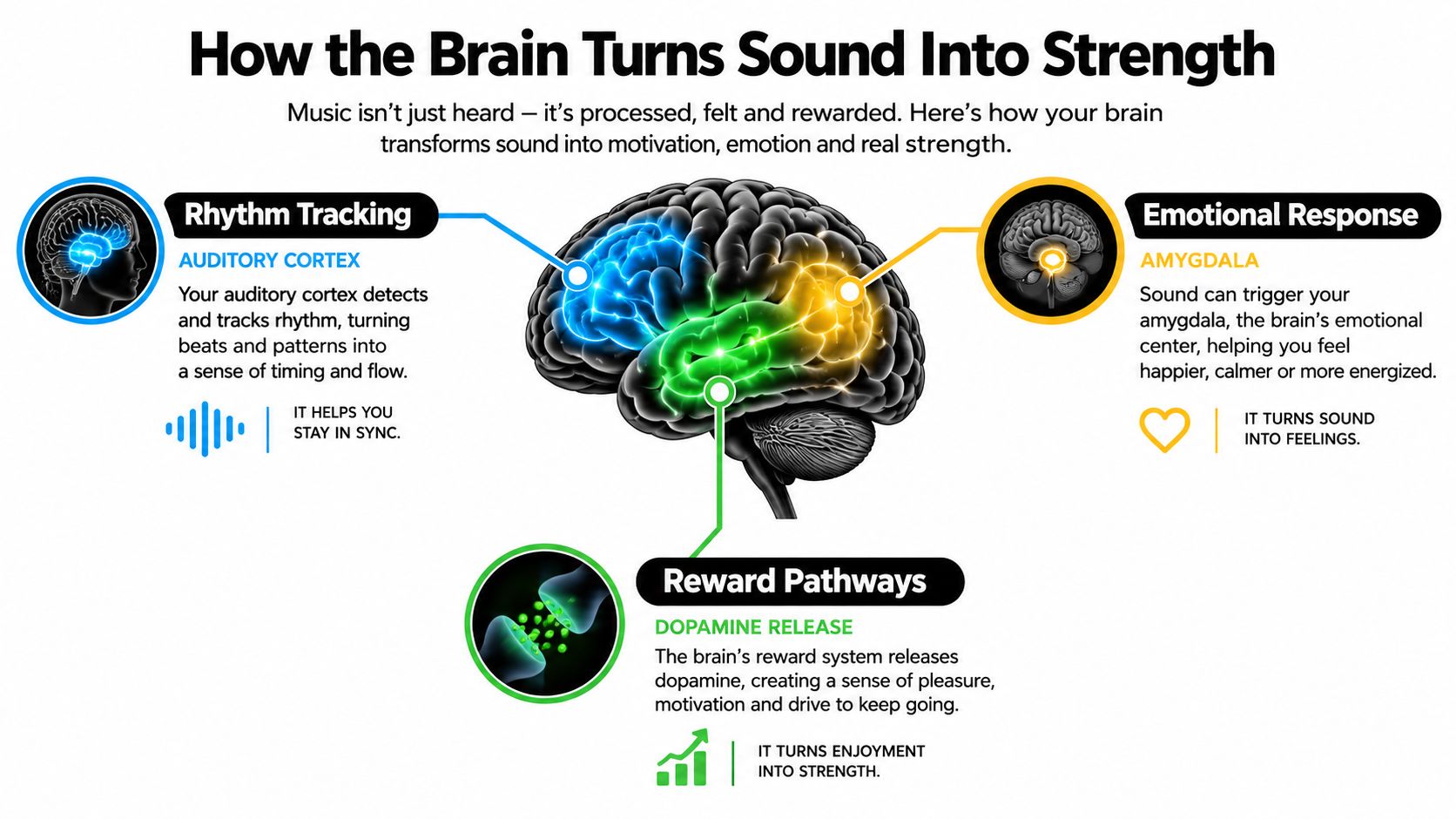
Music gives the brain a pattern to follow. Rhythm arrives as a sequence of expected beats, and melody creates expectations about what sound might come next. Listening is a little like participating in a conversation where you can often predict the end of a sentence. When the next beat or chord arrives as expected, the experience can feel smooth. A manageable surprise keeps attention engaged without necessarily overwhelming it.
This predictive quality helps explain why familiar music can feel stabilizing during difficult periods. You already know its shape. Your attention doesn't have to work hard to interpret every change, so some mental space becomes available for breathing, reflection, or movement. A systematic review of 50 studies found that preferred and familiar music, singing, and improvisation among trained musicians were associated with neural activation patterns relevant to emotion regulation. The same review noted that dissonance, excessive complexity, and unexpected musical events could create less desirable responses, as described in this review of music and emotion regulation.
From arousal to agency
Your response depends partly on your starting state. If you're highly agitated, a loud, unpredictable track may add stimulation when your nervous system needs steadiness. If you feel numb or immobilized, a gentle but rhythmic song may help you reconnect with sensation and action.
Active participation adds another layer. Singing requires breath, vocal control, attention, and memory. Clapping or walking to a beat links sound with movement. Playing an instrument turns listening into a task with choices and feedback. These activities can organize raw emotion into something your body is doing now.
The change doesn't need to be dramatic. Tapping your fingers while sitting in bed can be a small act of agency. Humming while preparing food can reconnect you with routine. Singing with another person can create contact without requiring an immediate conversation about pain.
Music can also help shift emotion gradually. A track that matches your sadness may help you feel recognized. A song with slightly more movement can then support a change in arousal. Ending with music associated with safety, competence, or hope gives the experience a direction rather than leaving you immersed in the original feeling.
Here is a short visual explanation of how rhythm, emotion, and physical motivation can interact while you listen:
The important idea is simple: music is structured input, not magic. Your brain can use rhythm, familiarity, prediction, movement, and personal meaning to adjust attention and arousal. That can create room for coping, but it doesn't guarantee recovery and it doesn't replace care when distress is severe.
What the Research Actually Shows
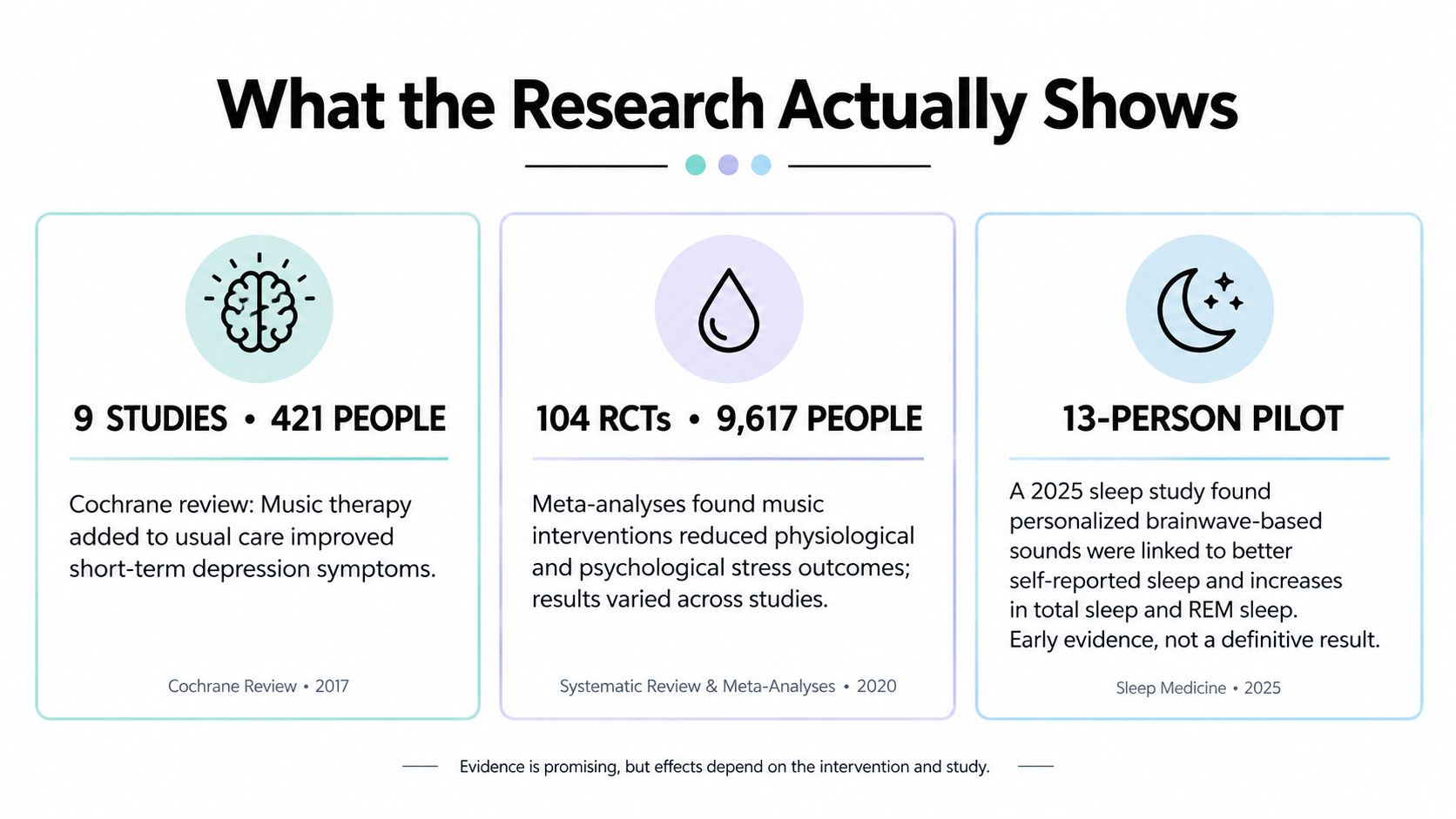
The strongest evidence supports a careful claim. Music can be a useful part of emotional support, especially when it's selected intentionally and used alongside other forms of care. The evidence doesn't support the broader promise that music universally heals every kind of pain.
A 2017 Cochrane review examined 9 studies involving 421 participants. It found moderate-quality evidence that music therapy added to usual treatment reduced depressive symptoms more effectively than ordinary treatment alone. For clinician-rated depression, the pooled standardized mean difference was −0.98, based on 4 studies and 219 participants. For patient-reported depression, it was −0.85, based on 4 studies and 142 participants, according to the review of music therapy for depression00225-1/fulltext).
The review also described benefits involving anxiety and everyday functioning, such as staying involved in work, activities, and relationships. That matters because depression can reduce motivation and social connection. A structured musical activity may create a manageable way to participate before a person feels fully hopeful.
Three conclusions worth carrying forward
- Stress responds to structured musical support. The evidence summarized earlier suggests that music-based interventions can affect both psychological and physiological stress outcomes.
- Depression benefits are complementary. Music therapy appears more useful when added to standard treatment, not when treated as a substitute for therapy, medication, medical evaluation, or practical support.
- Results vary. Personal history, musical meaning, intervention design, current mood, and the setting all influence what happens.
A 2025 systematic review of 32 studies found small-to-moderate improvements in emotional outcomes, but confidence in those findings was reduced by publication bias, inconsistent results, imprecise estimates, and weak study designs. The review also noted that benefits appeared more clearly in clinical populations than in nonclinical populations, as detailed in this systematic review of music and emotional outcomes.
That caution improves the practical message. Music may lower the volume of distress, help you express what you feel, or support a return to ordinary activity. It may also activate painful memories or leave you more withdrawn. The right measure isn't whether you had a powerful emotional reaction. It's whether the listening experience supports relief, perspective, connection, sleep, and functioning afterward.
Real Stories of Music Meeting Hard Seasons
The following examples are composite vignettes. They illustrate possible patterns, not guaranteed outcomes.
Grief that needs somewhere to go
After the death of her child, Lena avoided a particular song because it was connected to family memories. One evening, she chose to listen while sitting with a trusted friend. She cried throughout the track, but she didn't feel pressured to explain or stop.
The observable change was modest. She drank water, stayed in the room, and later sent a message to someone she trusted. The song hadn't reduced the loss. It had helped her experience grief in the presence of another person instead of carrying it alone.
Stress that needs a boundary
Martin cared for an older relative while working full time. His days blurred into appointments, messages, and unfinished tasks. He created a short evening playlist with familiar songs and played it only after putting away work materials.
The music became a transition ritual. He used the first track to change clothes, the next to prepare a simple meal, and the final track while turning off screens. The result wasn't instant relaxation. He noticed that his evenings had a clearer beginning, and he was more likely to complete ordinary self-care.
Recovery that needs participation
After surgery, Amira felt disconnected from her body. Physical rehabilitation was necessary, but it also made her feel like a passive observer of recovery. She began humming during gentle exercises and tapping a steady rhythm when movement felt frustrating.
Her small measure of progress was participation. She started initiating exercises rather than waiting for encouragement. Singing gave her a familiar action she could control while other abilities returned gradually.
These stories share a principle: music becomes more useful when it is attached to a specific need and observable next step. The song may help someone cry, mark a boundary, or act with more confidence. Without that connection, listening can remain an intense but isolated experience.
A Three-Part Listening Method You Can Start This Week
Intentional listening begins by respecting your current state rather than forcing positivity. A useful playlist moves through three stages.
Start with recognition
Choose a song that matches your present emotional energy. If you're grieving, a gentle song with honest lyrics may feel less alienating than an upbeat track. If you're tense, select something steady and familiar rather than something highly unpredictable.
Stay with recognition long enough to feel understood, but not so long that the track becomes a loop for self-criticism or despair.
Continue with a manageable shift
Move to music that changes one element gradually. It might have a clearer beat, a brighter harmonic quality, more vocal energy, or a stronger invitation to move. The shift should feel possible, not like an instruction to become happy before you're ready.
You can sing along, walk slowly, stretch, or tap your hand. Participation helps turn listening into a present-tense activity.
Finish with an anchor
End with a song linked to safety, competence, connection, or hope. This could be a piece associated with a supportive person, a familiar place, a spiritual practice, or a time when you handled something difficult.
Use the final track as a cue for one concrete action, such as drinking water, opening a window, replying to a message, preparing for sleep, or taking a short walk.
| Situation | First Stage, Match | Middle Stage, Shift | End Stage, Anchor |
|---|---|---|---|
| Everyday stress | Familiar, predictable music that mirrors tension without intensifying it | A track with a steady beat for walking, stretching, or tidying | Music associated with home, rest, or completing the day |
| Acute grief | A song that allows sadness and tears without demanding explanation | Gentle instrumental or vocal music with a little more spaciousness | A piece connected to a trusted person, memory, or safe routine |
| Longer recovery | Music that acknowledges fatigue, frustration, or uncertainty | Singing, rhythmic movement, or a song that supports a small task | Music linked to patience, capability, or the next realistic step |
Change the plan if your body gives you warning signs. Stop or switch tracks if your breathing becomes more restricted, memories become intrusive, agitation rises, or you feel pulled toward isolation. A playlist is working when it helps you return to life, not when it keeps you absorbed indefinitely.
When Music Keeps You Stuck Instead of Moving You Forward
Painful listening can feel meaningful while still making recovery harder. A song may accurately express your sadness, but repeating it for hours can strengthen attention around the same memory. Familiarity can soothe, yet it can also keep you inside a private emotional world when you need sleep, food, contact, or practical action.
The cautious findings from the 2025 systematic review of 32 studies make this distinction important. Emotional benefits were small to moderate, and confidence was reduced by inconsistent findings, publication bias, imprecise estimates, and weak study designs. Music can support processing, but intensity alone doesn't prove that processing is taking place.
Check the effect, not the intention
After listening, ask yourself:
- Relief: Does my body feel even slightly less tense, or more overwhelmed?
- Perspective: Can I see more than one thought or memory, or am I repeating the same conclusion?
- Connection: Am I more willing to contact someone, or more determined to withdraw?
- Functioning: Can I take the next ordinary step, such as eating, washing, working, or resting?
- Sleep: Has the music helped me settle, or has it kept my mind activated?
Write one sentence before and after a listening session. “I feel trapped and unable to act” might become “I'm still sad, but I can make tea.” That kind of change matters more than whether the song produced a dramatic release.
Self-monitoring rule: If listening repeatedly increases hopelessness, intrusive memories, sleep disruption, or isolation, treat that pattern as information. Change the music, shorten the session, add human contact, or seek professional guidance.
Music is a complement to care when symptoms are severe, persistent, or connected to safety concerns. Reach out to a qualified mental-health professional if hopelessness continues, functioning deteriorates, isolation escalates, or you're worried you may harm yourself or someone else. In an immediate crisis, contact local emergency services or a crisis service available in your area.
Healing Without a Therapist in the Room
Formal music therapy and personal music use are not the same. Clinical music therapy involves a trained practitioner, individualized goals, assessment, and a therapeutic relationship. Self-directed listening, singing, movement, and instrument use can still be meaningful, but they shouldn't be described as equivalent to treatment.
Access also shapes what “use music for healing” means in practice. Some people don't have a therapist nearby. Others can't afford regular sessions, lack reliable internet, live with hearing loss, share a crowded home, or don't recognize themselves in playlists built around unfamiliar genres and languages.
Adapt the practice to real conditions
If bandwidth is limited, use downloaded tracks, radio, a simple instrument, clapping, humming, or songs remembered without technology. A musical practice doesn't need an app, headphones, or a curated subscription. A familiar local song may be more regulating than a supposedly therapeutic playlist created for someone else's culture.
Shared spaces require consent. Keep volume low enough that others can rest, use headphones when safe and comfortable, and avoid assuming that everyone wants to hear your chosen music. If headphones cause discomfort or you need environmental awareness, try quiet humming, one-sided listening, or a soft instrument instead.
People with hearing sensitivities or other disabilities may need different forms of participation. Focus on vibration, rhythm, visual lyric display, movement, or a trusted person's singing. Protect hearing by avoiding uncomfortable volume and taking breaks when sound creates strain.
Understand the digital compromise
A 2025 global survey of practitioners across eight World Federation of Music Therapy regions reported that telepractice and digital tools have emerged as supplementary delivery models. It also identified persistent barriers, including insufficient policy recognition, inequitable compensation, limited funding, and fragile infrastructure, as described in this global survey of music-therapy practice.
Digital access can widen options, but a video call doesn't automatically provide culturally responsive or clinically appropriate support. Ask whether the practitioner is trained, whether goals are individualized, how privacy is handled, and whether the approach respects your language, identity, disability, faith, and musical traditions.
The most equitable self-directed practice is one you can repeat safely. Choose music that carries personal meaning, use a simple before-and-after check, and involve another person when listening brings up more emotion than you can manage alone.
Your Personal Plan for Music as a Source of Strength
Create a small plan for one situation you're facing this week. Don't build a perfect library. Choose a few tracks that serve different functions and write down what you expect each one to do.
A practical checklist
- Name the situation. Write “after work stress,” “grief in the evening,” “before rehabilitation,” or another specific moment.
- Choose the matching track. Select music that acknowledges your current state without pushing it toward greater distress.
- Choose the shifting track. Pick something with a little more rhythm, spaciousness, brightness, or invitation to move.
- Choose the anchor track. Use music connected with safety, capability, belonging, or hope.
- Choose one next action. Decide what you'll do when the final song ends, such as showering, eating, walking, messaging a friend, or preparing for sleep.
- Record the result. Ask, “Do I feel more able to connect and function, or more trapped inside the feeling?”
Keep the plan flexible. On one day, matching music may be enough. On another, you may need to skip directly to a quiet anchor. If a song becomes strongly associated with a painful memory, remove it for now rather than treating avoidance as failure.
For more ideas about making music part of a personal routine, explore the Dora Smith Official Merch blog. Use outside resources as inspiration, not as a substitute for individualized professional advice.
Music can be a companion rather than a cure. It may help you breathe through a hard moment, reconnect with your body, express grief, or take the next small step. When distress persists or safety becomes a concern, bring another person into the process.
Dora Smith Official Merch offers music-related merchandise and a space for fans to stay connected to an artist's work, which can add a tangible sense of identity and belonging to a personal listening ritual. Visit dorasmithofficialmerch.com to explore the collection and choose something that makes your music practice feel personal.